

Every chemo treatment is different, and every body reacts differently, but please, please, please, consider getting your Port-a-cath put in. I’m on the ABVD chemo treatment, which I go in for every 2 weeks, and having this port placed was the best decision I could’ve made! I was skeptical about it for weeks, but after lots of research and talking to people who regretted not getting it (and hearing their horror stories, which I’ll describe below) I decided that the port was a GREAT idea.
Below are the PROS and CONS of having a port:
What is a port-a-cath?
“A device used to draw blood and give treatments, including intravenous fluids, drugs, or blood transfusions. The port is placed under the skin, usually in the chest. It is attached to a catheter (a thin, flexible tube) that is guided (threaded) into a large vein above the right side of the heart called the superior vena cava.”
PROS
– The surgery is NOT painful 🙂 You’re put under anesthesia and you don’t feel a thing. Within 45 minutes, I was out in the recovery room and the surgeon held a mirror to my chest and showed it to me. I was shocked to see how that port was put under my skin without having felt absolutely nothing at all. IMPORTANT: Once it’s put in, carefully follow the hospital’s instructions on how to take proper care of it for the next few days. They’ll talk you over it and they should give you a handout. You don’t want it getting infected!
-When you go in for your chemo treatment, all you feel is a poke on your chest and that’s it for the whole duration of your chemo infusions. Most people who have the chemo infusion going through the veins in their arm, experience a very strong stinging feeling in their arm, that’s because the veins in our arms are three times thinner than the ones in our chest.
Here are some personal stories I’ve heard from people not getting the port put in and instead having the chemo go through the veins in their arms:
- A girl I talked to said she couldn’t sleep at night through her whole treatment because her arm was in so much pain.
- Your veins in your arms start giving out, due to the chemo damaging them, making it impossible for nurses to find your veins, which brings a whole new set of problems once that starts to happen. You have to keep in mind that chemo isn’t the only time you get injected in your arm. You’ll be doing regular blood work before each chemo as well. So that’s a lot of injections, giving your arms no breaks 😦
- When I went in for a PET Scan, the girl in the room next to me was crying because her arms were in so much pain (she didn’t have port) and the nurses couldn’t find her veins and so they had to cancel & postpone her PET Scan. If you can’t get blood drawn because nurses can’t get to your veins, there’s a chance your chemo treatment can get delayed as well.
- You’ll start to have limited movement in your arm because it’s in so much pain. And so if you’re like me, who’s usually pretty active (exercise/sports, working jobs, etc…) the last thing you want is to not be able to move your arm.
CONS
-It’s not pretty and it’s a constant reminder of chemo. The pros far outweigh this! You can always cover it up with clothes and you won’t even notice it 😉
-You feel something pushing out of your skin (only for the first few weeks) and then you don’t even realize it’s there.
-I originally didn’t want to get the port because I hate feeling “limited” to do things. I thought having the port was going to make me feel that way, but in all honesty, it’s only limited me from playing soccer, racquetball, and sports like that, that could accidentally hit the port and that would be very bad. I can still put a camera on my shoulder no problem (phew) and go on walks, go out, and sleep comfortably.
– Even once your chemo is over and you’re in remission, you’re advised to keep the port for an extra 6 months. The problem is, if you still need to continue more chemo treatments but you don’t have the port anymore, they can’t place the port back where you had it initially. The surgeon will need to start the process all over again on your other side, which is why the suggest to keep it just in case. I’m definitely planning on following their advice.
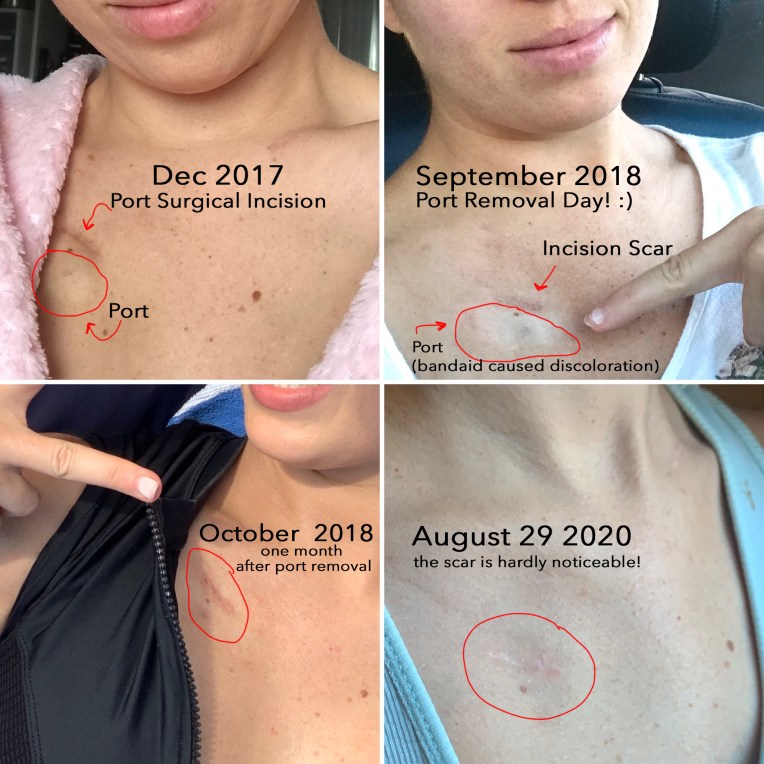
-Wondering about the scar after the port gets removed? You got nothing to worry about 😉
Here is an update:
 Beets by Fio
I am debating asking my doctor for a port. He said I didn’t need one when I started chemo in July of 2019, so I did Iv’s for my infusions, blood transfusion and fluids. I finished chemo in December of 2019 but started a 27 month clinical trial in March. With that I have an infusion every 28 days and a CT with contrast every 3 months. At first it was no big thing to get an iv, my veins stood out and behaved. Now it is getting harder and harder to get an iv started and always takes at least two tries and is quite painful – I’m usually in tears by the time it gets done. I still have 10 months to go on the trial and just don’t know if a port would be better or not. Your story has made me think it would. Thank you for your help.
LikeLike