*DISCLAIMER* I am not a licensed physician nor in a position to give any medical advice. This is solely my PERSONAL experience with fasting & chemotherapy. I’m simply sharing this information in case it may help others find alternative solutions to coping with side effects from chemotherapy.
Where it All Began
When I had shared the news I was going through chemotherapy with my friends and family on Facebook, a few friends had reached out to me and recommended the film “The Science of Fasting” on Amazon Prime. The film itself discusses the powerful effects of fasting in general, but it’s not focused on chemotherapy. In fact, the only research and tests you’ll see in the film was done on lab rats. I was blown away by this study, and entered into a fasting-research rabbit hole, wanting to know everything there was about it. Unfortunately, there wasn’t much helpful insight available online, and when it came time to talk about fasting with my doctors & oncologists, they didn’t know much about this topic either.
You can skip below to some helpful links or the quick bullet version of how fasting works with chemo, but here is my personal story about how ABVD Chemotherapy Treatment affected my body, and how fasting changed my life:
My ABVD Chemotherapy Experience
For me, I felt like I had no other choice but to try it. I spoke with many different patients who went through chemo over the years, and some people reported feeling no side effects at all, others a little, while some (including myself) experienced all of them. I felt like I was in one of those medical commercials where they say, “Side effects may include…” and go on to list ten thousand different side effects. I had medications from A-Z to mask all of the different reactions I was having. ABVD Chemotherapy hit me really hard.
Some of the side effects I was experiencing: nausea, indigestion, acid reflux, extreme bloating, constipation, headaches, excruciating and sudden jaw pain, making me feel like I was turning into the Hulk. I had damage to my cranial nerve, causing so much pain I felt like I was going crazy. Chemo took over my body in a way I felt I had lost all control. I had lack of appetite naturally as a result from all of the side effects I was experiencing. I developed mouth-sores which was the absolute most discomforting feeling. Not only did they bring pain, but they kept my appetite away because of the discomfort in my mouth. So what were my options at the time to help cope with the effects of chemo? I had only one option, which was to take all of the medications to mask away my side effects.
The medications helped, but it didn’t take away the damage done to my body. The worst part was that each one then brought its own side effect, and before I knew it, I was in this vicious cycle of using medication to cover up side effects of the side effects of the other medication… and so forth. I couldn’t take it anymore. Even just the thought of looking at the numerous orange bottles was depressing. I felt like I could open my own pharmacy with all the prescriptions I was given. As someone who never takes medication, and prefers natural methods of dealing with pain, this was my worst nightmare.
The Effects of Chemo on our Bodies
This is why cancer patients going through chemo are at a higher risk of becoming malnourished and/or anemic. It’s not just the chemo treatment itself which causes major damage to our system, it’s everything else that follows as well. With all those side effects I was having, I physically couldn’t eat for days, nor did I want to for most of the time in between treatments.
The problem is, between each chemo treatment (mine was every 2 weeks), it’s not enough time for our bodies to fully recover, before depleting our immune system all over again. It was typically about one week after chemo when I would finally feel a little better, and begin to eat again. Then a few days after, my next chemo treatment would come in, and shut my immune system down all over again. It’s a cycle, and naturally over time, our bodies with each chemo treatment become more and more weak, making the battle with chemo, an impossible one. The best visual way I can explain it is, being inside of a boxing ring, getting punched at over and over again, without having a chance to pick yourself up and fight back. It was rough.
After the treatment, I would sit at the corner of my couch, with a blanket, windows shut, in silence… for days. It was bad to the point where watching TV or even reading a book would take too much brain power and I couldn’t deal with it. Reading a book!? It was that bad. It was the first time in my life I didn’t feel like a human being. I can’t explain the feeling, but it felt inhumane. I felt powerless and lost total control of my body. I don’t mean to scare or discourage anyone, but this was my reality. I’m only mentioning this because once I fasted, this was all in the past and I literally, and scientifically, became a new person. Not everyone experiences these side effects, this was my personal struggle and exclusively how it affected me.
Everyone’s diagnosis, treatments, and reactions are different, so it’s hard to know what works or not, but I knew fasting was worth a shot. I had nothing to lose and everything to gain. So I decided to try an experiment on myself. Given the similarities between our physiologies, I figured if it worked with lab rats, and some clinical trials on humans, why couldn’t it potentially work for me?
Fasting Changed My Life
Scientifically speaking, it made A LOT of sense. Even with my first fast, it immediately CHANGED….MY…LIFE. I was a different person: more energetic, happier, feeling 70% less pain and side effects, and a joy for life I hadn’t felt during any of my chemo infusions. I no longer dreaded going into each treatment, in fact, the cycles were flying by and time was passing faster than ever before. I also enjoyed all my meals, and the bloodwork was showing my health improving and getting healthier with every treatment going by, instead of charts showing a decrease in health over time.
When you think of a cancer patient going through chemo while fasting, it initially seems like a terrible idea. But what I tell everyone is, before I introduced fasting, because of all of the side effects, I didn’t eat sometimes for 3-5 days AFTER my chemo treatments. While with fasting, you don’t eat 3-5 days BEFORE the chemo treatments. So the choice is simple, it’s just a matter of not eating before or after chemo infusions.
So you’re probably wondering, what is the science behind all of this MAGIC (personal opinion) and how does it work?
The Science behind Fasting for Chemotherapy Treatments (CliffsNotes version of the film & online articles reflecting the research)
PLEASE NOTE: Fasting should always be done under the supervision of your Doctor, Oncologist and Nurses. My first Oncologist was not on board with the idea I would fast during my chemo treatments, but my second Oncologist was open to it, as they were closely monitoring my bloodwork. You have to let your Oncologist and Nurses know you’re fasting, because the bloodwork will reveal information (low glucose levels, etc….) which may be alarming to the Hospital Staff and they may not want to give you your chemo infusion. Once my team knew I was fasting, I was given the clearance to administer my chemo infusions regardless of the bloodwork.
Chemotherapy works by attacking rapidly-dividing cells, which causes collateral damage to our immune system. But by fasting (only water) for 72 hours prior to treatments, it allows for less harmful effects to occur within our bodies, protecting our normal (non-cancerous) cells.
Study finds, when you “starve” your body, it gives permission to the stem cells (like “flipping a regenerative switch”) to allow the system to break down a huge portion of white blood cells. In the process, it recycles a lot of the old, damaged immune cells, the inefficient ones, and regenerates new immune system cells. When you fast, it promotes cellular clean-up, and you essentially regenerate an entirely new immune system.
Fasting with only water for 3 days may appear as unhealthy, especially with the dangers of a low white blood cell count, but as soon as you re-introduce food, the blood cells come back. Not only does the WBC regenerate, but a new batch gets produced, helping to fight off infection even more effectively.
Our normal cells are better equipped to deal with starvation, while cancer cells actually grow and cannot adapt to the new conditions of our system during fasting. As the cancer cells starve during the fasting process, they get weaker, allowing for chemotherapy to be even more effective, specifically on the cancer cells. Cancer cells are known to rely on glucose to meet their higher demand for energy. So under low blood glucose conditions, the cancer cells become much more vulnerable to chemotherapy. Meanwhile, our body cells, which typically use glucose as their main energy, have the ability to switch to a different fuel, and survive the fasting condition.
Summary Breakdown of 3- Day Fasting during Chemo:
When chemo enters our bodies, our normal healthy (non-cancerous) cells are already in the process of saving energy and recycling new immune system cells, while the cancer cells are the opposite, being active, using lots of energy, and thus, get weaker. So when chemo enters the body, our cancer cells are quick to absorb the drug, resulting in a more effective method to break down the cancer cells. Not only does this naturally result in a more effective cancer treatment, but fewer of our normal cells get affected in the process. Without fasting, both cancer & normal cells get broken down, but with fasting, the cancer cells take more of the damage.
My Personal Process of Fasting with ABVD Chemo Every 2 Weeks:
The fast began 48 hours prior to the treatment and 24 hours after infusion.
Let’s say Friday at 10 AM was my upcoming chemo treatment…
Wednesday 10 AM: stop eating. Make sure to have a good, solid meal the day before. I found it helped mentally knowing there was something potent in my stomach to hold me for the next few days 🙂
Friday: Chemo Infusion Day! As soon as my chemo infusion ended (which was typically about 4 hours after getting admitted into the hospital), I would begin my 24-hour countdown timer on my phone.
Saturday: Time would vary, but typically 24 hours after my infusion would be around 2pm. When the alarm sounded it had been 24 hours, I would then begin to re-introduce food into my system again, but very slowly, starting with a bowl of soup or rice.
Rinse & Repeat every 2 weeks! (per my own personal treatment)
Fasting vs. No Fasting
Fasting can be rough, especially on cancer patients. But as I’ve mentioned, the only difference with fasting is choosing not to eat before each chemo treatment, versus not being able to eat after chemo, due to all of the awful side effects. When I wasn’t fasting, sure the medications helped “mask” all of my side effects, but when I fasted, I was taking ZERO medications. I literally threw them all out! Physically and mentally, my body was healthier, and my chemo treatments had much less damaging effects on me.
In the middle of my treatments, I reached out to the Scientist who was conducting the study on the effects of fasting, Dr. Valter Longo, to personally thank him for his research. His findings ended up saving my life. It was an absolute game changer. I had regained control of my life, with a healthier body and mind. I was back to work, and I felt like I was living life again.
Thanks to fasting, my side effects were gone, my body was increasingly getting healthier with each treatment, and even as a surprise bonus, my hair began to grow mid-treatment, and grow FAST and healthy. You can see the hair growth in this link. All of these things were 100% attributed to fasting.
Before meeting with Dr. Longo, I was doing 3 days of fasting, as the film and links suggested, but he recommended to try 4 days. With 3 days of fasting, I was experiencing 70% less side effects than when I wasn’t. I felt like my body was having the same side effects, but not nearly to the extent at which it used to be. Everything was way more toned down (smaller/shorter headaches, a little stomach ache here and there, etc.) Then with 4 days of fasting, I had 0 side effects. I didn’t even feel like I was going through chemotherapy and it blew my mind. I could not believe the change I saw and felt in my body.
AFTER FASTING TIPS
If you fast for 3/4 days, before eating your first meal:
Start slow, with a simple bowl of soup or rice for the first meal, and take your time eating it. Then a couple of hours later, another small meal. If you waited days without food, you can be patient and begin by eating small meals every few hours 😉
Avoid animal protein/heavy meat for the first day. If your body is completely empty for 3/4 days (it’s essentially “shut down” in a way), even the smallest meal will kickstart your digestive system into gear again. I got too impatient one of the times and ate red meat after 3 days of nothing, and I felt like I ate an entire rhinoceros on my own. I do not recommend that! Be patient. Fasting is a course on patience and inner strength.
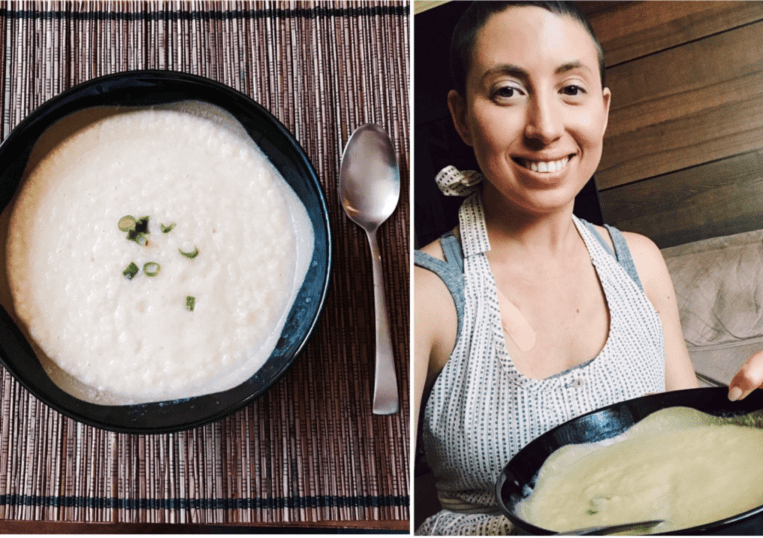
Excited for my first meal in 4 days!
After finishing up treatments
Some people ask if I still continue to fast even after my chemotherapy treatments, and the answer is yes! I don’t do it as often, but seeing the incredible benefits for myself, and knowing personal stories of sharing fasting with others and hearing great results too, fasting has a big place in my heart. I did a 4 day fast after after my last chemotherapy treatment as one final “reset” of my body, and for oldtimes‘ sake 🙂
I am so grateful that you shared your story. I have been searching for one person to confirm Dr. Longo’s fasting research with their personal experience. Thank you! I found your website 1 week before undergoing my 1st ABVD infusion. I am currently on my 9th infusion with great results.
Hi Suzy! this makes me so happy to hear. Where are you based? So you’ve been fasting with each of your treatments? I’m so happy to hear you’re having great results! That makes me so so happy. Thank you for sharing your journey with me 🙂
Hi! Thank you for this. Wondering if you ate breakfast on Wednesdays before 10:00am or would your fast actually begin after dinner the night before? Also it sounds like you did a strict water fast vs. the fasting mimicking diet? Thanks!!
Hi Devon, I did a strict fast, absolutely water only.
i was also very strict on my fasting clock.
Here’s how the schedule would breakdown:
Let’s say Friday at 10 AM was my upcoming chemo treatment…
Wednesday 10 AM: stop eating, (so i would eat all the way up until 10am on Wednesday)
Friday: Chemo Infusion Day! As soon as my chemo infusion ended (which was typically about 4 hours after getting admitted into the hospital), I would begin my 24-hour countdown timer on my phone.
Saturday: Time would vary, but typically 24 hours after my infusion would be around 2pm. When the alarm sounded it had been 24 hours, I would then begin to re-introduce food into my system again, but very slowly, starting with a bowl of soup or rice.
this 3 day fast, then eventually become 4 days… same rule applied, i would just stopped eating Tuesday 10am instead.
This is on my blog, but in case it was missed –
Before meeting with Dr. Longo, I was doing 3 days of fasting, as the film and links suggested, but he recommended to try 4 days. With 3 days of fasting, I was experiencing 70% less side effects than when I wasn’t. I felt like my body was having the same side effects, but not nearly to the extent at which it used to be. Everything was way more toned down (smaller/shorter headaches, a little stomach ache here and there, etc.) Then with 4 days of fasting, I had 0 side effects. I didn’t even feel like I was going through chemotherapy and it blew my mind. I could not believe the change I saw and felt in my body.

 Beets by Fio
Thanks a lot I have been diagnosed with classic hodgkin’s lymphoma and I am starting abvd chemo on Friday I will try this
LikeLiked by 1 person
Hi Diana! Checking in on this, how is your treatment going? Did you end up fasting?
LikeLike
I am so grateful that you shared your story. I have been searching for one person to confirm Dr. Longo’s fasting research with their personal experience. Thank you! I found your website 1 week before undergoing my 1st ABVD infusion. I am currently on my 9th infusion with great results.
LikeLiked by 1 person
Hi Suzy! this makes me so happy to hear. Where are you based? So you’ve been fasting with each of your treatments? I’m so happy to hear you’re having great results! That makes me so so happy. Thank you for sharing your journey with me 🙂
LikeLike
Hi! Thank you for this. Wondering if you ate breakfast on Wednesdays before 10:00am or would your fast actually begin after dinner the night before? Also it sounds like you did a strict water fast vs. the fasting mimicking diet? Thanks!!
LikeLike
Hi Devon, I did a strict fast, absolutely water only.
i was also very strict on my fasting clock.
Here’s how the schedule would breakdown:
Let’s say Friday at 10 AM was my upcoming chemo treatment…
Wednesday 10 AM: stop eating, (so i would eat all the way up until 10am on Wednesday)
Friday: Chemo Infusion Day! As soon as my chemo infusion ended (which was typically about 4 hours after getting admitted into the hospital), I would begin my 24-hour countdown timer on my phone.
Saturday: Time would vary, but typically 24 hours after my infusion would be around 2pm. When the alarm sounded it had been 24 hours, I would then begin to re-introduce food into my system again, but very slowly, starting with a bowl of soup or rice.
this 3 day fast, then eventually become 4 days… same rule applied, i would just stopped eating Tuesday 10am instead.
This is on my blog, but in case it was missed –
Before meeting with Dr. Longo, I was doing 3 days of fasting, as the film and links suggested, but he recommended to try 4 days. With 3 days of fasting, I was experiencing 70% less side effects than when I wasn’t. I felt like my body was having the same side effects, but not nearly to the extent at which it used to be. Everything was way more toned down (smaller/shorter headaches, a little stomach ache here and there, etc.) Then with 4 days of fasting, I had 0 side effects. I didn’t even feel like I was going through chemotherapy and it blew my mind. I could not believe the change I saw and felt in my body.
LikeLike